Friday, September 20, 2013

IPhone 5s and 5c


It's September 20 and the new iPhones are finally available today worldwide.  The two newest incarnations of Steve Job's mobile tech legacy were announced two weeks ago, to mixed reactions.  I am a fan who is less than enthusiastic about the current line-up.
 
An avid loyalist from the first iphone, I stopped upgrading after the 5th version-- the iPhone 4s.  Aside from the obvious cellphone function, I use my iPhones mainly as a camera backup for shooting candid photographs, and it frustrates me that Apple has not really upgraded its mobile camera technology for the last two generations.  Stuck at 8 megapixels for the last 2 years, despite slight improvements in low-light capabilities, I have had no real reason to upgrade my phone.  If I needed to shoot in extreme low-light, I have a Leica, several Canons and Mamiyas, and even a Go Pro 3 to choose from; so an increase in resolution would have been a great selling-point to me and other iPhone photographers.  Besides, the iPhone is now seriously lagging behind its competitors, who have been offering better cameras in their cellphones for years.
 
I have used the iPhone as a serious photographic tool for years, to the extent of having an exhibit of limited edition prints from my iPhone generated images.  It continues to be a great tool for visual artists like me, mainly because of its versatility and wonderful Apps.  But the resolution of its camera limits my print sizes to 8 x 10 inches.  Apple, please take note of this plea or I might be forced to switch to another brand, just to satisfy my technical needs.  I am already using a Samsung as a second phone to my now outdated 4s, trying to see if its technology is actually better.

Iphone fans line up from New York to Tokyo to get their fix.
 
This year, Apple released two versions of the iPhone to address a segmented market:  The iPhone 5s-- the logical descendant of the previous models; and the iPhone 5c-- to cater to a more budget conscious consumer.  The company made sure that there are slight differences between the two models to justify the 5s' steeper price.
 
Like the older models, the 5s is armored in an aluminum/plastic shell, while the 5c is encased in an obviously cheaper all-plastic body.  You can finally get the iPhone in a variety of colors:  the 5s in Silver, Gold and Gray trim; the 5c in pastel pink, green, blue, yellow and white.  The 5s has a 64-bit A7 chip and an extra M7 motion coprocessor; the 5c retains the iPhone 5 A6 chip.  The camera specs. of the 5s is essentially the same from the iPhone 5, with a larger sensor (8 megapixels with 1.5µ pixels); while the 5c retains the iPhone 4s camera specs.  The premium 5s model also has a 'True Tone flash', auto-image stabilization, burst mode and slow-motion video capabilities.  Both models feature a 4-inch Retina display.  But the 5s also has Apple's newly developed Touch ID fingerprint identity sensor installed on the main button for added security.

Wednesday, July 31, 2013

The Purge - Movie Review


Imagine living in a society where murder is legal one night a year...

"The Purge" is what can happen in the United States (or anywhere) in the near future, if 'freedom' is taken to the extreme.  Violence and murder are legally sanctioned by law to promote peace and economic health.  Sounds crazy?  I thought so too, when the movie began.
 
But the idea is intriguing none the less.   If we humans are really inherently violent, and that releasing our murderous impulses do result in relative peace and prosperity for the rest of the year, would it be justifiable to hold a 'hunting season' for killing en masse?  We sanction it for wildlife... and war... This movie makes us confront our darkside.  Just how far are we (collectively and individually) willing to go?

The family enjoying a brief calm, before the storm
 
A dystopian horror story set in the home of a relatively average (2.5 kids) upper middle-class suburban family, "The Purge" took me by surprise.  The plot is fairly simple: the father, a successful home-security specialist, 'locks-down' his house like an impregnable fortress for the 'Night of Purging.'  Given how the character is introduced and how the neighbors were acting, you knew right from the start that there was going to be an attack on him and his family that same evening.  The only questioned that remained was how will this attack be perpetrated, given the built-in barricade and state the art security system he installed his house?

The 'fortress' like house in the movie
 
The answer... through the kids.  Without them there would be no story and no movie to speak of.  I happen to have two kids, one girl one boy, exactly like the family in the movie, with roughly the same ages.  I may just have identified with Ethan Hawke's character too closely, but it certainly gave me pause for thought on how I can better educate my own given the moral dilema his character (James Sandin) was faced with.

James Sandin contemplating the fate of his family
 
His daughter was the first chink in his armor.  A teenager going through puberty, she is bored and unwilling to go along with their usual family routine.  Aside from her already stereo-typical teen angst, she has also fallen in love with a boy her father flatly disapproves of.  The boyfriend sneaks in with a gun that same evening to confront her father about their love-- the proverbial 'snake in the nest' dilema.  At first, I thought that the movie was playing towards the 'hostage' scenario I have seen in so many other films, where the boyfriend (or captor) abuses his hosts, maybe even calling in a couple of his friends to join in the fun.  But I was mistaken, it was just an appetizer for things to come.

Thursday, June 27, 2013

Celebrities And Their Cameras - 2

By popular demand, I am extending last year's photo collection: "Celebrities and their cameras" with a new set of celebrities shot with their cameras "on hand."  When I posted it last year, I did not realize that a lot of people would be interested in seeing their favorite celebrities being photographers themselves-- apparently we number in the thousands.
 
So here is an additional collection.  Consider it my way of thanking all of you, for your continued patronage :-)  Enjoy!
 
The Master (Picasso) captures light with a Leica
 
Frank Sinatra does it his way with a classic Nikon F 
 
Tony Stark (Robert Downey) always brings his Canon
 
Lady Gaga is a Nikon user
 
Eric Clapton trying to find his way around a Leica
 
An SLR on the yacht for Jackie (Kennedy) Onassis
 
A "fashionista" like Anne Hathaway always carries a compact
 
Jimi Hendrix prefers a Canon Super 8 to capture Purple Haze
 
Bon Jovi exudes style and quality by using a Canon with an L lens
 
Beyonce and her Canon EOS 50D 

Sunday, May 12, 2013

Restoring Old Photos

"Restoring old photographs" is an art in itself.  In my experience, it is a combination of photographic knowledge and painting skills.  I am not a professional restorer in the strictest sense of the word, but I do use restoration/retouching techniques in my work as a commercial photographer.  I have to warn you that I did not take any seminars to learn what I am about to share here.  So my methods might be a tad unconventional, but they do the work and get the job done.
 
Hair can be tricky to restore. Pay attention to highlights and shade.
 
By definition, "Photo Restoration" is the practice of restoring photographs that have been damaged by nature, harsh handling, the deterioration of the medium and/or plain neglect.  Before the advent of Photoshop (and other similar photo-manipulation software), restoring old photographs were only undertaken by professional restorers and serious hobbyists, because it required manual hand-painting or retouching with photo-safe dyes on the actual print.  It was costly and time consuming.  But digital technology changed all that.  By scanning the original print or negative and working on a digital facimile, we are able to restore the image without damage to the originals.  Through this process, we are not only able to restore but also improve the quality of the picture -- in terms of color, contrast and resolution.
 
Anyone equipt with Photoshop (any version or any similar software) can restore old photographs easily.  All you need beyond this basic software, is a good digital scanner and a lot of imagination.  Being good at drawing and painting helps, but visual acuteness is more paramount.  Because in the end, how a photograph ends up looking will all depend on an individual's personal taste -- something no one can ever teach.  So I limit my discourse to purely technique here.
 
I had to recreate the whole right-side of her face because of the damage.

Tuesday, April 9, 2013

Perception and Imaging


"How we see" and "what we see" have always been facinating to me.  I have always professed that we see with our minds, more than our eyes -- because informational pattern and meaning can only be comprehended by filtering it with our brain.  The "eye" is of primary importance because it is where light enters and is focused, but only after we have perceived order in the shapes, colors, shades and textures mentally do we really "see" and give meaning to the visual information we receive.
 
"Gestalt psychology" has been studying visual perception and how we see since the 1920s.  Gestalt psychologists believe that the brain is holistic, parallel and analog, with self-organizing tendencies. They believe that our minds have an innate tendency to see patterns first, before analyzing details; or that we have a tendency to see 'relationships' between individual components as parts of a 'whole,' whether they were intentionally assembled or accidental. The "gestalt effect" is the form-generating capacity of our brain to see figures and whole forms instead of a collection of random lines, shapes or shades.
 
"Gestalt perception" is illustrated in these examples
 
A few "Gestalt" principles
 
"Perception and Imaging: Photography - A Way of Seeing" is a guide to this facinating world of Gestalt perception. Written by an expert in the field of Photography and Imaging sciences, Richard Zakia, the book throughly examines visual perception and presents a compelling perspective on "how we see."  Richard is Professor Emiritus at the Rochester Institute of Technology and served as chair of the Fine Art Photography department and the Graduate Program in Imaging Art. He has written 13 books on photography and was the prodigy of Rudolf Arnheim, art and film theorist, perceptual psychologist and the leading proponent of gestalt perception. 

Monday, March 18, 2013

Christo's Big Air Package

Christo unveiling Big Air Package

Christo, the world famous environmental artist, unveiled his latest large-scale installation work "Big Air Package" last Friday.  It is the largest indoor sculpture ever erected.  It will be on display at the Gasometer Oberhausen in Germany from March 16 to December 30, 2013. 
 
Big Air Package: on top, inside and concept drawing 
 
The sculpture is made from 20,350 square meters of semitransparent polyester fabric and 4,500 meters of rope.  Encased inside a 117 meter high industrial complex (Gasometer), the inflated balloon-like piece has a total weight of 5.3 tons and a volume of 177,000 cubic meters.
 
Erecting Big Air Package
 
The balloon fills the enclosed space of the Gasometer, leaving a small passage around the sculpture to walk around in.  Air fans create a constant pressure of 0.27 millbar to keep the sculture inflated, with airlocks at the base to allow guests to come in and experience the art piece from the inside.  Light coming in from the skylights on top and 60 additional projectors create an otherworldly atmosphere and ambiance for the visitors.
 
At the opening of Big Air Package, March 15, 2013
 
Acting like a gigantic tent diffuser, the viewer is transported into an experience with pure light.  In Christo's own words, "you are virtually swimming in light when you are inside the Big Air Package... the inner space is probably the most unique aspect of the piece...when experienced from the inside, the space is almost like a 90 meter high cathedral."

Monday, March 4, 2013

Bolex Digital D16


It's just appropriate that my first blog for 2013 will be about the new Bolex D16.  Long awaited by die-hard Bolex fans, this camera had a long laborious journey towards its realization.

My beloved Bolexs: my motorized H16 SBM and my hand-cranked 1930s H16

I am one of those devotees aching to get my hands on one.
 
I bought my first Bolex 20 years ago to shoot my student films at Art Center College.  I had a choice between an Arriflex S and the Bolex SBM.  The Bolex won hands-down, because of its built-in manual-wind internal motor and its more stylish "retro" body.  I just could not get myself to like the "blowfish" like body of the Arriflex S.  At the dawn of the digital transition when I purchased the Canon XL-1s, I traded my SBM for an older all manual 1930s H16 with a turret mount -- which I thought was even better looking than the SBM.  I just had to have a Bolex, even if I got to use it rarely (just to create texture in my now mostly digital films).  I was really devastated last year when Kodak annouced its bankruptcy, which meant that my precious Bolex's days are numbered.  Well... until I found out about the new Bolex D16!
 
Proto-type body of the Bolex D16
 
The dream of creating a digital Bolex came from two Los Angeles based filmmakers, Joe Rubinstein and Elle Schneider.  After securing the blessing of Bolex, SA, they lauched a Kickstarter campaign that raised $100,000 in 24 hours.  After extensive field tests, tweaking, modifications and launch delays, the camera proto-type you see above is the finalize camera body, except for a few minor details in color.  The MSRP will be around US $3,000.

Tuesday, October 30, 2012

Lucas Bought By Disney

George Lucas with Disney CEO Bob Iger signing the media deal of the year

Trick or treat, smell my feet, give me something good to eat!
 
Like a giant Black Hole, Disney just swallowed another big star in the media universe.  This time it's none other than the empire simply known as Lucasfilm, Ltd.-- The home of the "Star Wars" and the "Indiana Jones" franchise.  Like Pixar Animation Studios (which Lucas also originally created), Marvel Entertainment, Muppets Studio (by Jim Henson), ESPN Inc., ABC Television, A&E Networks and for a short time, Miramax Films, Lucasfilm, Ltd. follows the fate of a dozen other highly successful media companies that eventually became a part of the Magic Kingdom.
 
The Star Wars and the Disney franchise blend into one
 
According to George Lucas, creator of the franchises and sole owner of Lucasfilm, Ltd., "I'm doing this so that the films will have a longer life... I get to be a fan now... It's a lot more fun actually, than having to go out into the mud and snow."  The "Star Wars" and the "Indiana Jones" franchises have taken a life of their own, with a global fan base of billions of fans; George is just tired of being at the helm, a position that makes him the primary target of biased fan critism and ridicule.  Recently, he has become the object of derision when he release the 3-D versions of the 6 "Star Wars" films. For years, die-hard fans have branded George of being a commecial sell-out and for ruining his original creation-- the first three "Star Wars" movies.  George sums it up simply, "Why would I make any more (movies) when everybody yells at you all the time and says what a terrible person you are?"
 
 
After the vicious reception of his prequels, George vowed never to do any more "Star Wars" films and he is holding on to that promise.  But now that the franchise is owned by Disney, a new trilogy is planned, starting with "Episode 7" continuing the story of Luke, Han Solo and Princess Leia beyond "Return of the Jedi."  After that, Disney plans to release a new "Star Wars" movie every two or three years.  George will remain as a key advisor to the upcoming projects, but they will be headed by mega-producer Kathleen Kennedy, current co-chairman of Lucasfilm and the upcoming division president under Walt Disney Studios.
 
Disney is purchasing Lucasfilm, Ltd. for $4.05 billion, paying half in cash and half in newly issued stock.  George will end up owning 40 million Disney shares, 2.2 percent of the total when the transaction is completed.  The deal includes Lucasfilm, Ltd., its franchises and its divisions-- Industrial Light & Magic (ILM) and Skywalker Sound. 
 
George had a wild ride for more than three decades, which started when the first "Star Wars" movie became a mega-hit.  He wished upon a star (wars) and his wishes came true... in fact, beyond his wildest dreams.  It's time for him to hang his laser pistol belt and his light saber and enjoy a much deserved retirement.  Now it will be up to Disney to regale us with the continuation of George dream.  Will Disney turn out to be allied to the "Force" or in league with the "Darkside," only time will tell... 

Thursday, October 11, 2012

Blood Art

Vincent Castiglia in front of one of his "blood" paintings

Vincent Castiglia is an artist who fully epitomizes our current culture.  With the rise of the "vampire" in popular entertainment, and our shifting focus on the organic and the sustainable, he is the perfect artist for our time.  This Brooklyn born artist stumbled on a concept that will surely have a cult following in years to come:  painting exclusively using human blood.
 
 
The concept seems shocking at first, but you will be pleasantly surprised by the quality and craftsmanship of the artwork.  Vincent's "blood" paintings are comparable to the drawings of the great master illustrators from the Renaissance-- Da Vinci, Michelangelo and Durer, but with a more modern-gothic phantasmagoric twist.  Using the human figure (anatomy) as his starting point, Castiglia examines the human experience and comments on our collective psychological and existential dilemas.
 
Using blood as paint, Vincent's illustration/paintings have a quality akin to classic ocher, the color used by the earliest artists.  Mixing his blood with water, he applies the mixture to paper very much like watercolor paint. Some of his paintings are huge (seven feet lengthwise), which can take up to 30 vials of blood and several months to complete.  Vincent believes that by using his own blood, his work literally comes "alive" with his own psychic/life force; dissolving the barrier between him and his artwork in the most literal sense.  The resulting masterpiece is not only unique, unusual and rare, but also visually stunning and viceral.  His art has the capacity to engage (or assault) us on multiple dimensions, from the most primal (by his use of blood), to the emotional and finally to the conceptual.  The caliber of his work earned him the honor of being the first American artist invited by the H.R. Giger Museum in Switzerland to have a solo exhibition.
 
The artist's paint tubes and brushes
      

Monday, September 24, 2012

There's No Business Like Soul Business

Rioters in Greece protesting against the video "Innocence Of Muslims"

In the wake of the recent worldwide riots in the Muslim world, I have been scrutinizing the power and the influence that media has in our modern global society. That one poorly produced and badly done video can have this much impact, is a very blatant warning to all of us. We must all start becoming more responsible and conscious about what we create and spread to the general public. Because any material or information we disseminate publicly, can now have worldwide repercussions in this current global information age-- that can result in mass violence and chaos. Freedom of speech is one thing, abuse of individual rights is another. Intentions are secondary to this issue, because even if the intention was innocent at the inception, the resulting misinterpretation can be fatal. Is "sorry" enough for lives lost? If we are adamant about our rights to free speech (and expression), then we should also have the decency to use it responsibly.
 
Actor/Filmmaker/Broadcaster Orson Welles doing "The War Of The Worlds"
 
Something similar (but in a much smaller scale) happened in 1938, when Orson Welles dramatized H.G.Well's novel,"The War of the Worlds." Some listeners only heard a portion of the broadcast and mistook the radio play for a real full-scale invasion of Earth by Martians. It may sound silly in hindsight, but with the tension of World War II looming, panic ensued-- with people across the Northeastern United States and Canada fleeing their homes. That was just the radio, now we have TV, cable TV, the internet with its social networks and mobile device access in the hands of billions of people around the world. Social responsibility and culpability regarding public media must become the social and cultural norm (a part of our generally accepted etiquette and manners). 

Wednesday, September 12, 2012

6th Generation iPhone - iPhone 5

The iPhone 5 is slightly bigger than its predecessors

The sixth generation iPhone was just unveiled several hours ago. Dubbed the iPhone 5, it is actually the 6th iPhone down the line from the 1st model.

As expected, Apple upgraded its most popular product inside out. While it retains its shape and general cosmetic appearance, the iPhone 5 is actually slightly longer and thinner than the 4s and now has an anodized aluminum back (same material used in Apple's notebooks). IPhone 5's new length accomodates its 4 inch (diagonal) widescreen fingerprint-resistant display with 1136-by-640-pixel resolution. The headphone jack has also been relocated to the bottom, beside the built-in speaker and the more durable "lightning connector" (w/c replaces the older 30-pin connector from previous models).

The new phone is 4G LTE capable and supports advanced networks such as HSPA, HSPA+, and DC-HSDPA. It has Dual-band 802.11n wi-fi connectivity for faster browsing and downloads, up to 150 mbps. The new A6 chip offers better graphic performance and is more efficient, twice as fast as the A5 chip in the 4s.  The camera in the iPhone 5 remains at 8 megapixels with essentially the same hardware specs, but has better low-light performance (2 stops better), improved noise-reduction and improved video image-stabilization. It also has a new panorama feature - with one smooth motion you can shoot 240 degree high-resolution panoramas, up to 28 megapixels.

For details on the iPhone 5's features go to:  http://www.apple.com/iphone/features/

Would I upgrade? I probably would, since I have upgraded from every version of the phone since its inception. But I am in no hurry. I am happy with my current 4s model and the features on the new iPhone 5 can wait until after the Christmas rush is over.

--image from Apple.com

Sunday, September 2, 2012

Celebrities And Their Cameras

Celebrities are normally found in front of the camera.  But in this collection of celebrity photographs I collected from the internet, we see them behind the camera-- being photographers themselves.  I thought it would be interesting to put these pictures together in one exhibit.  There seems to be a personality fit in their choice of camera formats and brands.  What do you think?
 
Large Format for Angelina Jolie 
 
Canon DSLR for Madonna
 
Classic Nikon for Kristen Stewart 
 
Avril Lavigne likes Canon
 
Matt Damon and Ben Affleck horsing around with a Hasselblad

James Dean and his Rollei TLR 

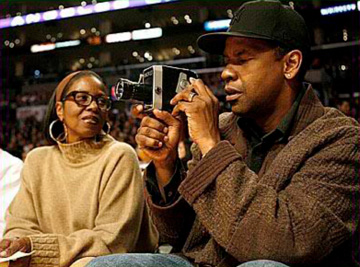
Denzel Washington using a classic 8mm movie camera
 
Julia Roberts uses film in her Leica
 
Brad Pitt likes using a classic Leica