Showing posts with label cameras. Show all posts

Wednesday, September 9, 2015

9th Generation - IPhone 6s & 6s Plus

The new iPhone 6s and 6s Plus
 
It's that time of year again when we, hardcore IPhone fans, welcome the newest incarnation of our favorite gadget. A few hours ago, Apple's CEO Tim Cook unveiled the 9th generation of its popular smart phone in California-- the IPhone 6s and its larger sibling the 6s Plus. Tim referred to the new models as "the most advanced smartphones in the world."
 
Among its newest features are the upgraded 12 megapixel camera and a more advanced touch-screen capability called 3D-touch. Although a lot of people have already scrapped buying traditional cameras in favor of their cell phone cameras for years now, with the 6s' 12 megapixels sensor, the IPhone has finally crossed and complied with the technical specs. of a good consumer grade point and shoot camera. The larger sensor is now 4K video capable and offers optical image stabilization (on the 6s Plus). It also has superior low-light performance (temporal and special noise reduction) compared to past models as well as better color accuracy and tonal performance. The front facing camera is now capable of taking 1080p video and 5 megapixel stills with support for slow-motion video, "selfie panoramas" and a "True Tone Flash" on the display that matches the ambient light for true to life color and natural-looking skin tones (the Retina Flash allows the display to flash 3 times brighter than usual). To enhance the 6s' photo taking capabilities, Apple has also added "Live Photos," 12 megapixel photos with motion (short video clip) and sound snippet that result in more dynamic photos.
 
The 6s and 6s Plus comes in 4 metallic colors
 
The next generation multi-touch technology called "3D Touch," offers enhanced pressure sensitivity as well as feedback. Aside from the more familiar touch-screen gestures like tap, swipe and pinch, Apple has added peek and pop. According to the literature, 3D Touch "lets you do the things you do often faster and with fewer steps. Many of the actions can even be done with a single press, right from the Home screen. The improved multi-touch capability will also deepen the experience of your favorite apps and games."
 
The new A9 chip is not only faster, it is also a capable gaming console with robust graphic performance. A third-generation chip with a 64-bit architecture, it has a 70% improved CPU performance and a 90% boosted graphic performance from the previous model. The M9 motion coprocessor is integrated directly into the A9 chip which results in better battery life, despite the improvement in power. The 6s supports 23 LTE bands with LTE Advance* and improved Wi-Fi, doubling its previous band speed.
 
Made from 7000 series aluminum used in the aerospace industry and the most durable cover glass (dual ion-exchange process) on any smartphone now available on the market, Apple has reinforced the new models to eliminate the fragility issues seen on the IPhone 6 Plus. Aside from the gold, silver and space grey, the 6s also comes in rose gold. Both models will be available in 16GB, 64GB and 128GB configurations.
 
Although I am really excited about the camera improvements, I will personally be passing on this version, only because I have found that skipping a generation is the best way to upgrade our IPhones within the family. I upgraded to the 6 Plus last year (and so did my daughter), so it is my wife (and my son's) turn to get the 6s this year. It just goes to show that this gadget/tool has become such an essential part of our lives, that it has become a permanent item on our yearly  family budget. 
 
--Photos from www.apple.com 

Friday, February 6, 2015

Canon's New High Resolution 5DS & 5DS R


My long wait is finally over! Canon just came out with cameras I actually want... and need.

The new Canon EOS 5DS R and its twin 5DS

As a commercial studio and fine-art photographer, image resolution is critical to my work. The last time I was this excited about a camera was 13 years ago when the Canon EOS-1Ds first came out; arguably the 1st successful full-frame DSLR, after the pioneering Contax N Digital failed. Its successor, the 1Ds Mark II, has been giving me wonderful high quality images for my magazine and newspaper assignments ever since.  But I still have to rent digital backs for my Mamiya RZ67 Pro IID and my Sinar P2 whenever I have high-resolution (Billboard Advertising, Wall Mural) projects. Not any more... 
 
The Canon 5Ds and 5DS R are 50.6 Megapixel, full-frame DSLRs!
 
The two new high-resolution models are exactly alike, except for the absence of the Low-pass filter on the 5DS R model. Both are equipped with a newly designed 50.6 megapixel full-frame CMOS sensor with dual Digic-6 processors; a 61 point High Density Reticular Auto Focus; full HD (1920 x 1080) 30p video with time-lapse function; continuous shooting up to 5 fps; dual card slots (1 CF + 1 SD); an intelligent viewfinder with 100% coverage; a 3.2 inch Clear View II LCD monitor (170 degree viewing angle, 1,040,000 dot VGA); and a magnesium-alloy body. Additional features include an EOS Scene Detection System with a 150,000 pixel RGB+IR Metering Sensor for more accurate exposures; an advanced mirror control mechanism and selectable shutter release time lag that helps suppress camera vibration for added image clarity; an Anti-flicker function to compensate for flickering light sources and assist in acquiring consistent exposure and color; and user selectable 1.3x and 1.6x crop capabilities for added flexibility. The normal ISO range for both cameras is 100-6400, with expanded speeds up to 12800-- pretty decent for studio applications.
 
The absence of the Low-pass filter on the 5DS R is an option reserved for specialized applications that need extra-crisp focus, like high-resolution advertising, landscape and fine art photos. There have been a lot of Canon users in the past couple of years who have experimented with removing the LPF from their stock 5D and have claimed an improvement on their camera's sharpness and overall resolution. Canon is now offering that option in the 5DS R.
 
To everyone familiar with my blog, you all know that I just recently acquired my fourth complete digital camera system (Fuji X) for my everyday "Street" and travel work so I do not have the budget this year for this camera. But I am dusting my Canon Lenses in anticipation... 
 
I am also anxiously awaiting the launch of the 5D Mark IV, the successors to the 1Dx and 1Dc models, as well as the "mystery Canon camera" that has been rumoured (3D?). But for my current needs, these two models are already sufficient. Thank you Canon!!!!

Here is a video by the Canon Digital Learning Center on the 5DS and the 5DS R:

 
--Images and video taken from Canon, USA    

Wednesday, December 3, 2014

Why I Shoot "Street"

My favorite "Street" film camera, a 1960s B&H Dial 35

To go forward, we sometimes have to step back...
 
That is exactly what I did when I decided to branch out formally into "Street Photography," six months ago. After being involved in the Photographic Arts for more than a third of a century, the practice of taking photographs was beginning to lose its magic. From an amateur hobbyist, I had successfully transitioned into a professional who specialized in commercial studio photography. But after years of doing that, photography became "work" and I lost the yearning to photograph anything outside of the "studio," without the "proper" camera set-up-- lenses, filters and lighting equipment. It became so bad, that I actually refused to bring a camera on vacation for several years (even during my Honeymoon, w/c my wife still refuses to forgive) thinking that it would be better to miss a shot than to execute one that was crappy-- of course, I was being seriously philosophical about all this. To me, it was a real choice between bringing tons of heavy equipment or bringing nothing at all, so I gave my wife the lame excuse that it was better for both of us if she just brought her own camera, because she would just lose her patience with me lugging a heavy bag on our vacations, then waiting around for the "right light" to present itself. In truth,  I actually did not want to be weighed down by anything whatsoever when I was on R&R, preferring to "live for the moment" than to be burdened by necessity.
 
"Levitation" Los Angeles, USA (shot on film)

I have been a student of "Zen" since I was a teenager-- reading books as well as practicing "Zazen" in private. I got into Zen Buddhist philosophy because I was practicing Martial Arts during that time and was attracted to the spontaneity it brought its practitioners, particularly to artists. For a while, I even regularly attended early morning "Zazen" sessions with the Monks in the Zenshuji Soto Mission Temple in Los Angeles, and contemplated monkhood. But my photography went the opposite direction. As I got more involved with photography and cinematography while formally studying these disciplines in film school, I slowly associated the process of making good pictures with deliberateness and precision-- with the methodical studio-based approach espoused by Hollywood. I became engrossed in the graphic simplicity and idealistic formality of studio photography, particularly in Fashion (Avedon, Penn, Newton) and Portraiture (Karsh, Newman, Halsman). To me this type of photography was beautifully "Zen" like in spirit; but learned, at the same time, that the techniques involved in their execution were consciously methodical. Their measured quality appealed to me deeply-- both aesthetically and emotionally. So I strove for this standard in my photographic work for years, after all isn't "art" rooted in "art"-ifice? But this rigid approach gradually boxed me in.

"Hound Dog" Los Angeles, USA (shot on film)

Of course I admired master photojournalists like Henri Cartier-Bresson, Dorothea Lange and Sebastiao Salgado for years. But their type of photography belonged in an alternative universe to mine. I thought that there was a natural chasm that existed between "idealism" and "realism" in photography, that I came to believe that studio photographers and photojournalists were distinguished not only by their specialties and skillsets, but also by their personalities-- which I imagined to be polar opposites. For a long while, I firmly identified with the "photo-romanticists" (editorial and commercial photographers), who created images from their mind's eye, and not with the "photo-realists" (news and documentary photographers) that dealt with the more messier and unpredictable images from real life. I confused specialization as a choice between these two opposing camps.

Boy was I wrong! Because after much soul searching, I found out that like my photojournalistic brethren (and sisters of course), I do have a natural predilection for photographing/filming people more than any other subject. Like them, I am also curious about people-- I love stories and find nothing more compelling to capture on camera than human drama. I other words, I finally realized that I am a voyeur by impulse!

"A Brief Interlude" Hong-Kong, China

Monday, September 15, 2014

8th Generation - IPhone 6 & 6 Plus

 
The new IPhone 6 and 6 plus
 
It has become a tradition of this blog to review IPhones as they come out. If you look to the right-hand column of this page, you can still see the ancient IPhone icon I still use to display my commercial portfolio. I have been an IPhone user since version one and have upgraded almost from one generation to the next with the exception of the last two versions (5 and 5s/5c). My wife continued to upgrade, so I have been suffering comparison with my old 4s for three 3 long years.

My reason for sticking with my 4s was two fold: I have a 64GB version and Apple never expanded the internal memory of the IPhone 5/5s beyond that; and the specs. of the camera on both versions remained essentially the same as the 4s-- 8 megapixel f 2.4 (f 2.2 on the 5s, big deal). Aside from the cellphone, text and email functions, I use my IPhones to take snap shots (occasionally for fine art photography) and as my main music player/IPod. I have been needing a larger capacity smartphone, but Apple has been keeping its maximum memory at the same levels. With just my music and Apps, I have already been topping out at 60+ gigabytes for the last two years. Why would I invest more money on a device that is essentially similar to the one I am already using?

I got a Samsung smartphone as a backup since a lot of people have been raving about them, but quickly got disenchanted because the interface is light years away from the IPhone's. It's hard to describe-- its like driving a Hyundai to Apple's BMW. They are both good functional cars, but they are just not in the same class. A lot of people are critical about the IPhone lagging behind Samsung technology, but I guess to me and to a lot of diehard IPhone users, it all boils down to feel and user experience. I want my smartphone to be an extension of me, not a fiddly gadget I need a manual to figure out. The IPhone's thoroughly intuitive interface, by itself, has kept me loyal to the brand.

When Apple finally announced the newest version of its smartphone last week, the IPhone 6 and its larger twin, the IPhone 6 Plus, the first thing I checked were their maximum memory capacity and their camera specs. I was so relieved to find out that both versions come in 128GB models, although 164GB would be more than welcome. The camera remains at 8GB with essentially the same specs. as the 5s, but with a new sensor equipped with "Focus Pixels" that Apple claims to provide more information on the image resulting in better autofocus, face detection and exposure control. The newer features that got me excited are the camera's capacity to shoot video at 60 fps in 1080p and 240 fps at 720p as well as shoot time-lapse with continuous autofocus and cinematic video stabilization (optical image stabilization too in the 6 plus version). Despite what I still consider to be slight camera upgrades, these are features I gladly welcome since I can now finally take serious video footage with my favorite smartphone.    
 
The camera now features super slow motion and time-lapse.

Sunday, June 22, 2014

Most Photojournalists Use Canon

 
Have you ever wondered what camera brand Photojournalists use the most?  In the film era, it used to be Leicas and Nikons, but in todays digital world it's Canon!
 
Here is a pie-chart from hastalosmegapixeles showing the breakdown:
 
(click on image for better resolution)
 
--image property of hastalosmegapixeles  

Thursday, May 22, 2014

"Street" with my Fuji X Cameras

My Fuji X-Pro1 and X-E1 cameras

I am now one of those who can testify that the Fuji X cameras are indeed revolutionary. They are compact and small, yet boast of the best features most professionals require in a digital camera system.
 
The Fuji X series cameras, particularly the X-Pro1 and the X-E1 (X-E2), are amazing photographic tools. Both are equipped with  the  16 megapixel  APS-C X-Trans CMOS that professional users swear equal the "top of the line full-frame DSLRS" in picture and color quality-- some even claim that it rivals Leica. The sensor's sensitivity is also highly praised for its extreme low-noise up to ISO 6400 (ISO can be extended up to 25600). Although the X-E1 has a built in flash, I never saw the need to use it even underneath the light of the moon. The X cameras are mirrorless, so are rock steady and quiet handheld even at 1/15th of a sec.; with the image stabilized zoom lenses I have been able to hand hold them without blur even at  1/4th of a sec. My two cameras are beautifully "retro-styled" like analog-era rangefinders, the X-Pro1 even has a state of the art optical viewfinder that shifts frame-lines automatically. Lighter and half the size of my professional DSLRs, with lenses equal in quality to Canon's L series, my Fuji X system is a dream come true.
 
I am not trading-in my Canon, Mamiya or Sinar systems just yet. In my line of photography, each system has its advantages. I still prefer my Canons for rapid action and motion/cinematic-imaging jobs (high fashion, sports, wildlife) and my Mamiya RZs & Sinar P for high-resolution commercial projects; but the Fuji X system has certainly added new dimensions to my work-- street and travel photography.
 
My XPro-1 with my old manual Canon FL lenses.

My Fuji cameras' compact, light, quiet and unimposing build; and its ability to tackle natural light in any condition makes them the perfect companion cameras to carry everyday wherever I go. The Fuji X system is also robust, currently supporting 7 high quality prime lenses and 5 zoom lenses with more in the pipeline. The system also has dedicated flash units (which I probably will never need) and attachments to tailor fit the cameras to the user. With the cameras' "shoot w/o lens" feature, I could also choose to mount 3rd party lenses using adapters. My old manual Canon FL prime lenses have a new life and are now back in service!
 
When I started my photography, I was essentially doing "street photography." But when I became a professional my subject matter became focused, I specialized and narrowed down my imaging to studio based techniques. It is so refreshing to be able to shoot anything, anywhere, in any light. This flexible camera system has given me back a fresh perspective on Photography that I have been missing for a long time.
 
Here is a sample of my work using the Fuji X cameras: 
 
"The Wedding Party"
 
"Peking Road"
 
"Uninterested"

Thursday, June 27, 2013

Celebrities And Their Cameras - 2

By popular demand, I am extending last year's photo collection: "Celebrities and their cameras" with a new set of celebrities shot with their cameras "on hand."  When I posted it last year, I did not realize that a lot of people would be interested in seeing their favorite celebrities being photographers themselves-- apparently we number in the thousands.
 
So here is an additional collection.  Consider it my way of thanking all of you, for your continued patronage :-)  Enjoy!
 
The Master (Picasso) captures light with a Leica
 
Frank Sinatra does it his way with a classic Nikon F 
 
Tony Stark (Robert Downey) always brings his Canon
 
Lady Gaga is a Nikon user
 
Eric Clapton trying to find his way around a Leica
 
An SLR on the yacht for Jackie (Kennedy) Onassis
 
A "fashionista" like Anne Hathaway always carries a compact
 
Jimi Hendrix prefers a Canon Super 8 to capture Purple Haze
 
Bon Jovi exudes style and quality by using a Canon with an L lens
 
Beyonce and her Canon EOS 50D 

Monday, March 4, 2013

Bolex Digital D16


It's just appropriate that my first blog for 2013 will be about the new Bolex D16.  Long awaited by die-hard Bolex fans, this camera had a long laborious journey towards its realization.

My beloved Bolexs: my motorized H16 SBM and my hand-cranked 1930s H16

I am one of those devotees aching to get my hands on one.
 
I bought my first Bolex 20 years ago to shoot my student films at Art Center College.  I had a choice between an Arriflex S and the Bolex SBM.  The Bolex won hands-down, because of its built-in manual-wind internal motor and its more stylish "retro" body.  I just could not get myself to like the "blowfish" like body of the Arriflex S.  At the dawn of the digital transition when I purchased the Canon XL-1s, I traded my SBM for an older all manual 1930s H16 with a turret mount -- which I thought was even better looking than the SBM.  I just had to have a Bolex, even if I got to use it rarely (just to create texture in my now mostly digital films).  I was really devastated last year when Kodak annouced its bankruptcy, which meant that my precious Bolex's days are numbered.  Well... until I found out about the new Bolex D16!
 
Proto-type body of the Bolex D16
 
The dream of creating a digital Bolex came from two Los Angeles based filmmakers, Joe Rubinstein and Elle Schneider.  After securing the blessing of Bolex, SA, they lauched a Kickstarter campaign that raised $100,000 in 24 hours.  After extensive field tests, tweaking, modifications and launch delays, the camera proto-type you see above is the finalize camera body, except for a few minor details in color.  The MSRP will be around US $3,000.

Wednesday, September 12, 2012

6th Generation iPhone - iPhone 5

The iPhone 5 is slightly bigger than its predecessors

The sixth generation iPhone was just unveiled several hours ago. Dubbed the iPhone 5, it is actually the 6th iPhone down the line from the 1st model.

As expected, Apple upgraded its most popular product inside out. While it retains its shape and general cosmetic appearance, the iPhone 5 is actually slightly longer and thinner than the 4s and now has an anodized aluminum back (same material used in Apple's notebooks). IPhone 5's new length accomodates its 4 inch (diagonal) widescreen fingerprint-resistant display with 1136-by-640-pixel resolution. The headphone jack has also been relocated to the bottom, beside the built-in speaker and the more durable "lightning connector" (w/c replaces the older 30-pin connector from previous models).

The new phone is 4G LTE capable and supports advanced networks such as HSPA, HSPA+, and DC-HSDPA. It has Dual-band 802.11n wi-fi connectivity for faster browsing and downloads, up to 150 mbps. The new A6 chip offers better graphic performance and is more efficient, twice as fast as the A5 chip in the 4s.  The camera in the iPhone 5 remains at 8 megapixels with essentially the same hardware specs, but has better low-light performance (2 stops better), improved noise-reduction and improved video image-stabilization. It also has a new panorama feature - with one smooth motion you can shoot 240 degree high-resolution panoramas, up to 28 megapixels.

For details on the iPhone 5's features go to:  http://www.apple.com/iphone/features/

Would I upgrade? I probably would, since I have upgraded from every version of the phone since its inception. But I am in no hurry. I am happy with my current 4s model and the features on the new iPhone 5 can wait until after the Christmas rush is over.

--image from Apple.com

Sunday, September 2, 2012

Celebrities And Their Cameras

Celebrities are normally found in front of the camera.  But in this collection of celebrity photographs I collected from the internet, we see them behind the camera-- being photographers themselves.  I thought it would be interesting to put these pictures together in one exhibit.  There seems to be a personality fit in their choice of camera formats and brands.  What do you think?
 
Large Format for Angelina Jolie 
 
Canon DSLR for Madonna
 
Classic Nikon for Kristen Stewart 
 
Avril Lavigne likes Canon
 
Matt Damon and Ben Affleck horsing around with a Hasselblad

James Dean and his Rollei TLR 

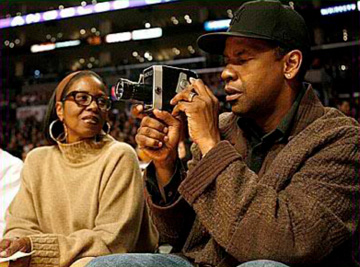
Denzel Washington using a classic 8mm movie camera
 
Julia Roberts uses film in her Leica
 
Brad Pitt likes using a classic Leica

Tuesday, May 8, 2012

My Favorite iPhone Photo & Video Apps.

Playing my Traveler guitar using my iPhone as an Amp. (photo by Anne)

I have been an iPhone fan since its inception and yes, I am one of those freaks that have gone through all five versions (iPhone 1, 3G, 3Gs, 4 and now the 4s) of this popular Smart Phone.  I just love the versatility of this gadget-- "a digital Swiss Army Knife."  With one tool, I am always carrying a virtual office wherever I go-- my telephone, my computer, my music and most importantly (as a photographer), a camera/videocamera.

I shot and edited this photo using the 1st iPhone

I shot and edited this photo using the iPhone 3G

When I got my first version of the iPhone, I just used the camera for casual snap-shots.  At 2.0 megapixel, the camera was just too "light" to use for anything more serious.  Since the phone came with some great Apps., I was always eager to upgrade.  I began using the iPhone for my Fine Art work after upgrading to the 3G.  There was only a megapixel difference, but I was able to clearly print my photos up to 8" x 10" (using the Camera Bag App.).  You can see the results of this initial foray in my "Grounded Series." Now with the 4s' 8 megapixel camera, I can leave my trusty compact Leica D-Lux 3 at home.

Here is an example of a photo I shot and edited with the iPhone 4s.

Although there have been a slew of lens attachments and gadgets that have been made to enhance the performance of the iPhone's camera, I never really used any of them personally.  Carrying attachments bulkier than the phone itself defeats the portability and ease the gadget offers.  My main attraction to the iPhone aside from its obvious convenience, has always been the availability of wonderful Apps.  To date, I have more than 400 Apps. on my current iPhone.

Here are some of photo and video Apps. I use regularly:

Friday, April 13, 2012

Canon's New Ultra Cameras: 1Dc and C500

The Canon Cinema EOS family with the new C500 and the 1Dc

Yesterday, Canon, Inc. announced two new cameras they will be introducing at this year's NAB - the Canon EOS 1Dc and the Canon EOS C500.  The two new EOS Cinema EOS cameras (Super 35mm) are 4K capable, with support for uncompressed Canon RAW file (still for 1Dc and motion for C500).
   

After the success of the hybrid 5D MKII and the 7D with Indie Filmmakers, Canon shifted its R&D to its products' video capabilities.  Last year, it created a new product line called Cinema EOS with the introduction of the C300.  Aside from pro-class cinema/broadcast cameras, the EOS Cinema family also features new pro-cinema lenses.  Faced with a shrinking consumer camera base (mainly due to cellphone cameras), the company is clearly shifting its focus to the professional motion imaging market.

Monday, April 2, 2012

Stewart Sy's Wild World

Stewart capturing beauty underneath the waves

Stewart Sy's love affair with nature and the wild started at a very young age.  Growing up in the Philippines, he fondly recalls spending a lot of his free time pouring over the catalogued back issues of National Geographic in the Xavier School library (we were classmates), dreaming of one day visiting all those exotic places and experiencing the grandeur of the wilderness captured by the magnificent NatGeo photographers.  After graduating from college (DSLU) in 1989, Stewart migrated to Canada to follow his family.  In Vancouver, he discovered a dive shop a few blocks from their house.  He signed up for a course, and the rest is history -- he has been diving now for more than 20 years.

Stewart discovered photography pretty much the same way, by accident.  People were curious about his new diving hobby and were badgering him about it.  So he finally decided to bring a camera with him during his diving expeditions to capture some of the beautiful things he saw underwater.  This second hobby also became an obsession.  Not only did he become a diving photographer, he liked photography so much that he became a part-time freelance commercial photographer too.  Aside from this, he runs two photography related businesses:  one that offers professional digital scanning services; and the other, a dealership offering aquatic photographic equipment and accessories.


Stu and I lost contact after we graduated from High School, so I was not aware of his photography until we reconnected in Facebook last year.  Stewart would post some of his work once in a while, and I was soon impressed by the consistency of his vision and skill.  He has an unmistakable artistic 'eye.'  According to him, he drew and doodled a lot when he was younger, but he never formally studied photography or any other art form.  Amazing, is the first word  that comes to mind, whenever I think of his photographs. 

I interviewed Stewart to get a better insight into his photography, his vision and his art:

Saturday, March 10, 2012

Is It The Camera Or Is It The Photographer?


Should the photographer or the camera be credited for the quality of a photograph?  The answer to this question seems obvious (to me), yet photographers often encounter statements from people who readily tell them, "I love your pictures, you must have a great camera" or "your photos are beautiful, that expensive (professional) camera is certainly worth what you paid for."  It seems that most people have a general impression that photographers are only as good as their camera, and that a newer model, with more bells and whistles, will actually do miracles for anyone's photography-- a myth propagated and fueled by Camera manufacturers.

This erroneous belief started more than 100 years ago when George Eastman simplified the photographic process by inventing the first Kodak Camera.  "You press the button, we do the rest" promised George Eastman in 1888.  Everyone, wherever they went (since it was also portable), could easily take a picture with a Kodak -- essentially a shoebox sized light-tight box with a simple shutter, pre-loaded with his newly invented rolled-film (enough for 100 exposures).  Before Eastman, photography was a laborious occupation, exclusive to professionals who used cumbersome cameras and individually prepared glass plates.  The Kodak camera brought photography to the masses, and for the first time, knowledge and experience in the craft of photography took a back seat.

Since 1888, developments in photographic technology and imaging had made it easier and easier for all of us to take better photographs-- from point-and-shoot cameras with flash, to faster film stock and even auto-focus.  The current digital technology has even reached the point (in my opinion), where it is almost impossible to take a badly exposed photo.  Our current digital cameras (or cellphones) are not simple boxes anymore, but micro-sized pro-grade cameras that have variable shutters, irises, lenses and programmable flash guns that can all be automatically adjusted by computer.  "You press the button, and the camera literally does the rest."  In this day and age of the digital camera, everyone is at least, a competent photographer.

So has the camera finally replaced the photographer, after 120 years of technological advances?